
Uneven Sidewalk Trip and Fall Injuries: Who Is Liable?
Liability for an uneven sidewalk injury depends on who owns, controls, or maintains the walkway and whether that party knew or should have known about the dangerous condition. A cracked, raised, or uneven sidewalk does not automatically make a municipality or private property owner legally responsible. Determining liability requires examining property control, legal duties, notice of the hazard, and the accident circumstances.
Led by veteran litigator Rick Alexander, The Alexander Law Practice knows what it takes to pursue compensation after a slip-and-fall accident. Read on to learn how liability is determined after an injury on someone else’s property.
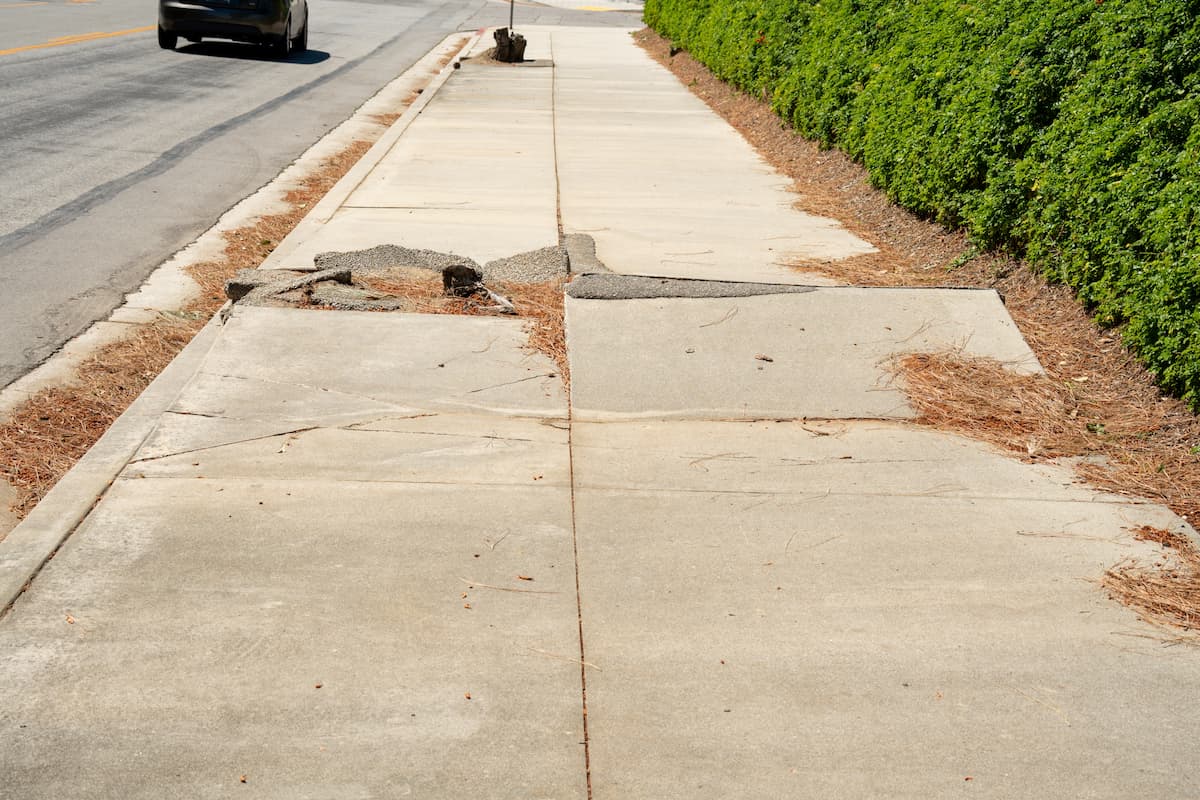
Who Is Responsible for an Uneven Sidewalk?
Responsibility depends on who owns, controls, or is legally responsible for maintaining the sidewalk. Proximity to a building does not necessarily mean the adjacent business owner controls or maintains the path.
To identify the potentially responsible party, determine whether the sidewalk is part of a public right-of-way, private property, a commercial property, or a community association’s common area. Depending on the location and applicable duties, potentially liable parties may include a city or county, a commercial property owner, a property management company, an HOA, a condominium association, or another entity responsible for maintenance.
City and County Sidewalks
Can you sue the city after falling on sidewalk hazards? Potentially, but government claims involve strict statutory procedures. Public walkways maintained by a city or county fall under Florida’s sovereign immunity rules. The state waives immunity for negligence claims up to statutory caps, provided injured parties satisfy administrative notice rules. To prove municipal liability, you must show the government agency had proper notice of the condition.
Commercial Properties and HOAs
Private entities assume legal duties when walkways fall within commercial or residential developments. Shopping centers, business parks, homeowners associations, and condominium boards must maintain walkways in a reasonably safe condition. Determining liability requires examining deeds, maintenance contracts, and who controls the path where the tripping occurred.
What Must You Prove in an Uneven Sidewalk Injury Claim?
To establish a claim, you must prove that a dangerous condition existed, the responsible party breached its duty of care, and that failure directly caused your injuries.
Actual and Constructive Notice
An injured party must show that the responsible party had notice of the hazard. This can be shown in one of two ways: actual notice or constructive notice. Actual notice means the owner directly knew about the defect. Constructive notice is used when evidence shows the owner should have known—that the defect existed long enough that reasonable inspections would have revealed it.
Common Uneven Sidewalk Hazards
Walkway hazards stem from various maintenance failures, including:
- Raised concrete caused by tree roots
- Cracked or broken pavement
- Missing or displaced pavers
- Height differentials between concrete slabs
- Deteriorated surfaces and poor surface transitions
A height differential alone does not automatically prove negligence. Liability depends on visibility, lighting, notice, and surrounding circumstances.
What Should You Do After Tripping on an Uneven Sidewalk?
Preserving evidence after an uneven sidewalk injury is crucial, as property owners often repair hazards quickly.
Photograph the Sidewalk Defect
Take detailed photos of the defect from multiple angles. Capture close-up shots showing height differentials alongside a reference object, as well as wider photos showing surrounding lighting and context.
Document Your Injury and Gather Witness Information
Photograph visible injuries, save the footwear you wore during the fall, collect witness contact details, and seek medical attention immediately.
Act Quickly on Government Claims
Claims involving Florida governmental bodies require formal written notice under Florida Statutes Section 768.28. Because government deadlines are shorter, consulting a sidewalk accident attorney immediately helps protect your rights.
Injured After Tripping on an Uneven Sidewalk? The Alexander Law Practice Can Help
The Alexander Law Practice handles complex premises liability cases with a skilled, seasoned, and determined approach, building the evidence needed to pursue your claim through negotiation or trial.
Schedule a free consultation today to discuss your rights.
Image Credit: Tom Harwood / Shutterstock